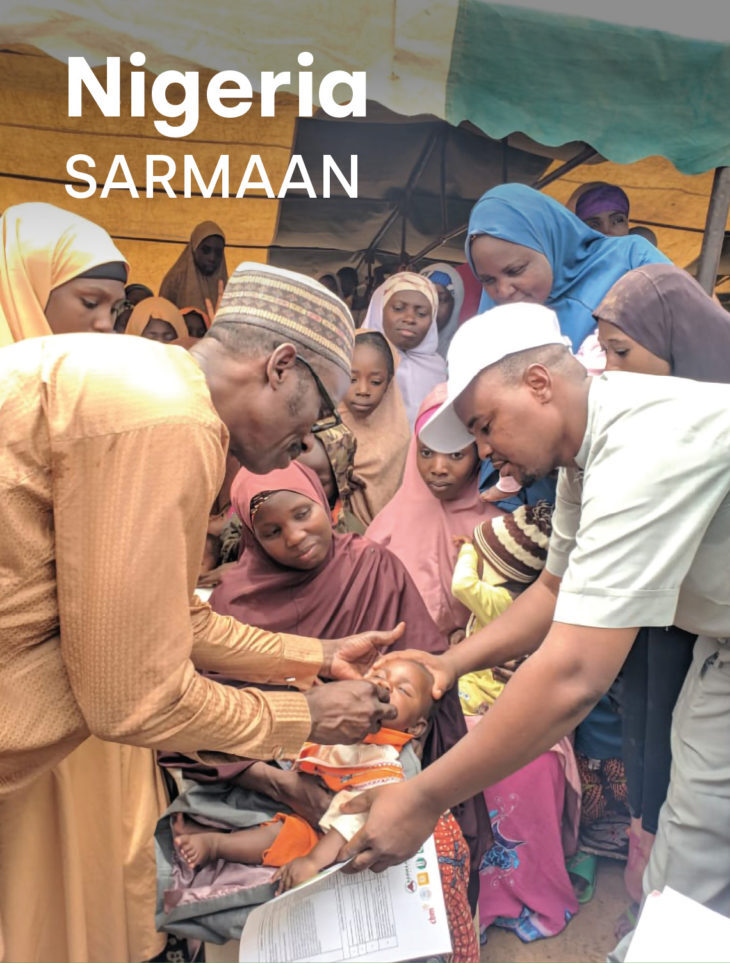

One major child-health programme for Nigeria, wey dem call SARMAAN, don reach another major milestone as e don cover more than 16 million children between 1 and 59 months across 11 northern states.
The programme na part of the wider effort to reduce the number of Nigerian children wey dey die before dem reach five years. SARMAAN dey use mass administration of azithromycin as one of the interventions, while health experts dey also monitor the safety of the medicine and possible antimicrobial resistance.
The development dey come as Nigeria dey record some improvement for under-five mortality. Figures from the Nigeria Demographic and Health Survey show say under-five deaths don reduce from 132 deaths per 1,000 live births in 2018 to 102 deaths per 1,000 live births in 2023–24.
But even with this improvement, the situation still serious. The current figure of 102 deaths per 1,000 live births still dey more than four times higher than the Sustainable Development Goal target of 25 deaths per 1,000 live births.
This one mean say Nigeria still get plenty work to do to protect the lives of young children, especially children wey dey live for communities where access to quality healthcare, medicine and other basic services still dey difficult.
The Lead Investigator of SARMAAN and Director of Research for Nigerian Institute of Medical Research, Professor Oliver Ezechi, say one important lesson from the programme be say large-scale health intervention fit happen alongside proper safety monitoring and scientific evaluation.
READ ALSO: PLATEAU TIGHTEN HEALTH SAFETY AS TINCITY METRO INTRODUCE “NO FACE MASK, NO ENTRY” RULE
According to am, the programme no just distribute medicine to millions of children and waka commot. Health authorities also put systems in place to monitor the safety of the drugs and watch for possible antimicrobial resistance.
The programme also dey put serious emphasis on community involvement and trust. Organisers say reaching millions of children no be work wey government or health workers fit do alone. Parents, caregivers, communities, frontline health workers and government authorities all need to join hand.
Dr Zainab Shinkafi-Bagudu, one of the SARMAAN Champions, say true healthcare equity na when every child fit benefit from important health interventions, no matter whether the child dey for city, village or hard-to-reach community.
The First Lady of Jigawa State and SARMAAN Champion, Hadiza Namadi, also stress say behind the millions of children reached by the programme dey plenty mothers, fathers, caregivers and communities wey open their doors and trust the health workers.
She say maintaining this trust go require continuous communication, respect for communities and strong leadership from government.
SARMAAN also highlight the importance of proper training for health workers, supervised drug administration, safety monitoring and systems wey fit respond quickly whenever parents or caregivers raise concerns.
Professor Robinson Wammanda, another SARMAAN Champion, explain say the large number of children involved means say the programme need different platforms and well-organised delivery systems to make sure children for different communities no dey left behind.
But beyond the number of children wey the programme don reach, another big issue now na how Nigeria go sustain the progress.
The organisers want the lessons from SARMAAN to become part of the country’s wider child-health system, instead of making the success remain something wey only happen for one project period.
Dem also dey call for stronger government ownership, proper planning and sustainable funding so that child-survival interventions fit continue and reach more children.
The SARMAAN programme na expected to feature for discussions on equity, inclusion and sustainability at the 18th World Congress on Public Health for Cape Town, where experts from different parts of the world go discuss how countries fit build stronger systems to protect public health.